
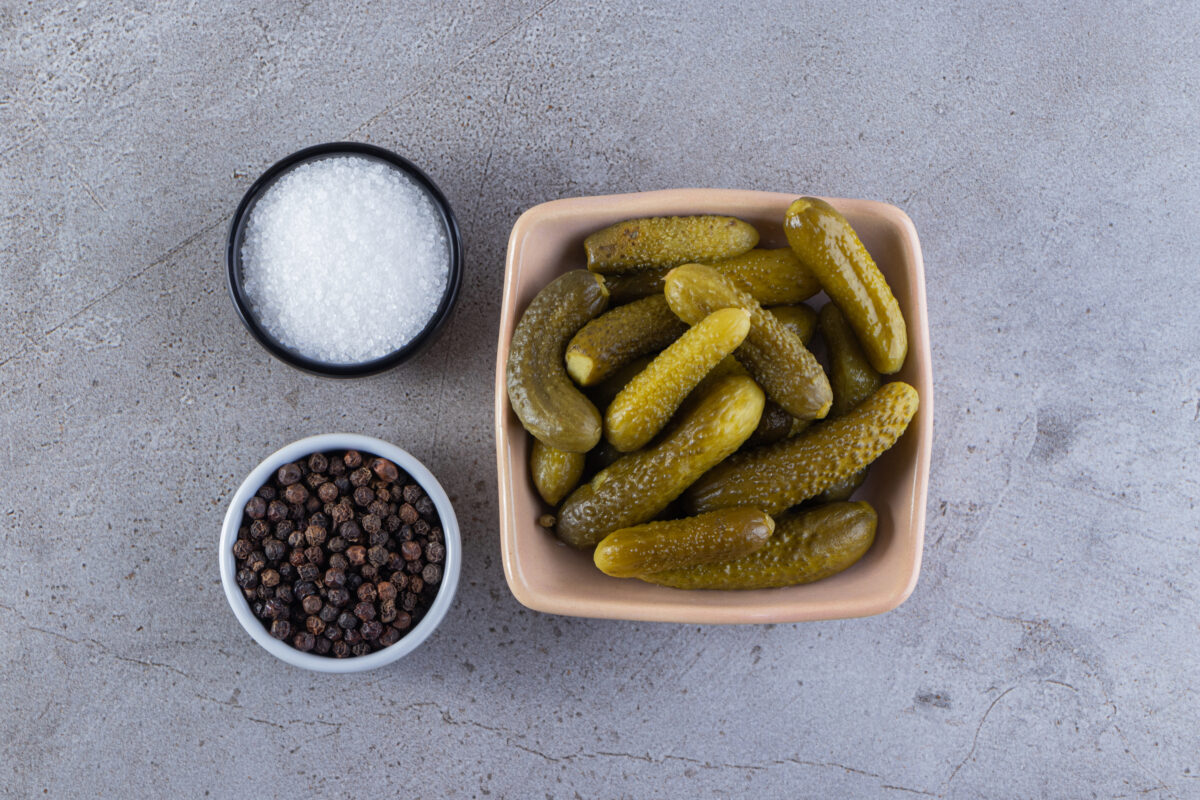
India is an established source of pickled gherkins for importers in Europe, the United States, the Middle East, and other regions. APEDA lists processed vegetables among the country’s key agricultural export categories, and gherkins form a steady part of that trade.
The supplier base has expanded over the years, and the difference between a careful producer and a weak one has widened with it. Importers who search for India’s best gherkin exporters often find a long list of names with little to compare them on.
This guide offers a structured way to evaluate that list. It follows the import process in sequence, from selecting a product to the dispatch of a container, and it sets out the documents to request and the packing details to confirm before you commit to an order.
Why Buyers Source Gherkins from India
A gherkin is a small cucumber grown for pickling. It keeps its crunch after pickling, which is why it works in burgers, salads, and snacks, and as a side with Italian, continental, and oriental dishes.
Karnataka accounts for the largest share of India’s export-grade pickled gherkins. The crop is picked young, usually within 45 to 55 days of sowing, so the right soil, water, and harvest timing matter a great deal.
Buyers tend to choose Indian gherkins for a few practical reasons:
- Many manufacturers work with contract farmers, which keeps the supply chain short and traceable.
- Farms that follow Good Agricultural Practices (GAP) produce more even size, color, and texture.
- Plants that follow Good Manufacturing Practices (GMP) lower the risk of contamination during grading and packing.
Indian exporters already ship to demanding markets in Europe and North America, so they know the paperwork and food safety rules involved.
Step-by-Step: How to Import Gherkins from India
Step 1: Choose the Preserving Medium
This choice shapes taste, packaging, and how you will use the product. There are three main options.
- Natural vinegar: Tangy and ready to serve. It suits supermarkets, restaurants, and food-service buyers. Packing is usually in jars, bottles, or pouches, and bulk drums are available on request.
- Salt brine: Mild, close to the natural cucumber taste. Many buyers treat it as a base product and add their own seasoning later. It usually ships in bulk HDPE drums, so it fits repacking and private-label work.
- Acetic acid: For buyers whose recipes call for a set level of acidity.
Preserved gherkins in drums and in pails are also available for processors who plan to repack.
Step 2: Pick the Grade and Size
Gherkins are sold by grade, and grades are based on count. A smaller number means a smaller gherkin. Eleven grade ranges run from 10/20 up to 300+:
- 10/20, 10/30, 20/30
- 30/40, 30/60
- 60/100, 60/160
- 80/120, 100/160
- 150/300, 300+
Size can also be stated by length in centimeters. The options are 3-6, 6-9, 9-12, 8-10, and 5-8.
Buyers who pack whole gherkins for retail usually want tight grade ranges. Buyers who slice or dice for sauces and relishes have more room to move. Settle the grade before you place the purchase order, not after the container ships. Custom grading is available when a standard range does not fit.
Step 3: Check Certifications Before You Order
A non-compliant shipment can be detained, rejected, or destroyed at the port of entry. That cost is far higher than anything saved in a price talk. So look at certificates first and price second when you compare gherkin exporters in India.
Start with this list:
- FSSAI Central License: Without a valid one, a manufacturer has no legal basis to process or export food from India.
- FSSC 22000: An internationally recognized food safety certificate.
- Kosher certification: Needed if you supply Kosher markets.
- FDA registration (US orders): Ask for the registration number and check it on the FDA website yourself.
- APEDA registration and EU compliance (European orders): This covers traceability, hygiene records, pesticide residue limits, and labeling rules.
Do not assume one certificate covers every market. Rules differ from country to country.
Step 4: Send an Enquiry and Ask for Samples
A clear enquiry saves days. The enquiry form at Indo Western Agro Exports asks for the product, grade or size, medium (natural vinegar, acetic acid, or salt brine), quantity in FCL, and destination country. FCL means full container load.
When you write, also ask for grading charts, certification documents, and samples. If the supplier is new to you, a small trial shipment is a sensible way to test them before a larger order.
Step 5: Confirm Packing and Quantity
The standard bulk pack is a 260-litre food-grade HDPE drum. Pails suit smaller quantities, and retail jars or bottles suit buyers who want a finished product with no repacking.
Before you confirm, ask:
- How are the drums sealed for transit?
- What are the net and drained weights per drum?
- How are drums labelled, and is private label or custom packing available?
Step 6: Inspection and Dispatch
At Indo Western Agro Exports, a pre-shipment inspection is built into every order. It takes place before the container leaves the facility. Ask for the inspection report so you have a record of what was checked.
Documents to Request from Your Supplier
Keep this short list handy when you start talking to exporters:
- Current copies of the FSSAI Central License, FSSC 22000, and Kosher certificates
- A grading chart that matches the grade you plan to buy
- Pre-shipment inspection reports
- The FDA registration number, for US orders
- APEDA registration and EU compliance records, for European orders
- Paperwork for your own import market
On that last point, ask whether the exporter has shipped to your country before. A supplier with that history has already dealt with the customs, labeling, and shipping rules your route requires.
Where Indo Western Agro Exports Ships Gherkins
Indo Western Agro Exports supplies gherkins and its other products to customers in the United Kingdom, the United States, Australia, France, Germany, Greece, Italy, the Netherlands, Poland, Russia, South Korea, Spain, Sweden, and the UAE. Buyers in other global markets are served as well.
The company is based in Sira Taluk, Tumkur District, Karnataka. Besides gherkins, it exports banderillas, jalapeños, bell peppers, chillies, baby corn, and peppercorns. That helps buyers who would rather source several products from one supplier.
How Indo Western Agro Exports Controls Quality from Farm to Drum
Good gherkins start in the field. The company runs contract farming across Karnataka. Farmers receive non-GMO seed and the inputs they need, and they are trained in Integrated Farming, modern techniques, and Good Agricultural Practices on soil, water, and crop management.
Drip irrigation and mulching save water. When the harvest is ready, company staff buy it and carry it to the factory.
At the factory, every batch is cleaned, graded, soaked, and washed. Then it is packed in airtight containers. A quality control team watches each step. Production follows GAP and GMP, and the quality systems meet USFDA and European Union norms. The company holds FSSC 22000, FSSAI, and Kosher certifications.
About 75% of the factory staff are women, many from villages near Sira.
Summary
Importing gherkin from India is easier when each decision is taken in order. Start with the medium, whether natural vinegar, salt brine, or acetic acid, and then choose a grade between 10/20 and 300+. Settle the grade before the purchase order is placed, since changing it after dispatch is far harder.
Next, confirm the supplier’s FSSAI, FSSC 22000, and Kosher status, along with the FDA or APEDA and EU records that apply to your market.
Once that groundwork is done, send a clear enquiry that states the product, grade, medium, FCL quantity, and destination country, and ask for samples with it. Before the order is confirmed, check how the drums are packed, sealed, and labelled. Finally, ask for a pre-shipment inspection report so there is a written record of what was checked before the container leaves the facility.
Ready to plan your first order? Send an enquiry to Indo Western Agro Export with your product, grade, medium, FCL quantity, and destination country, and ask for a grading chart and samples.

