
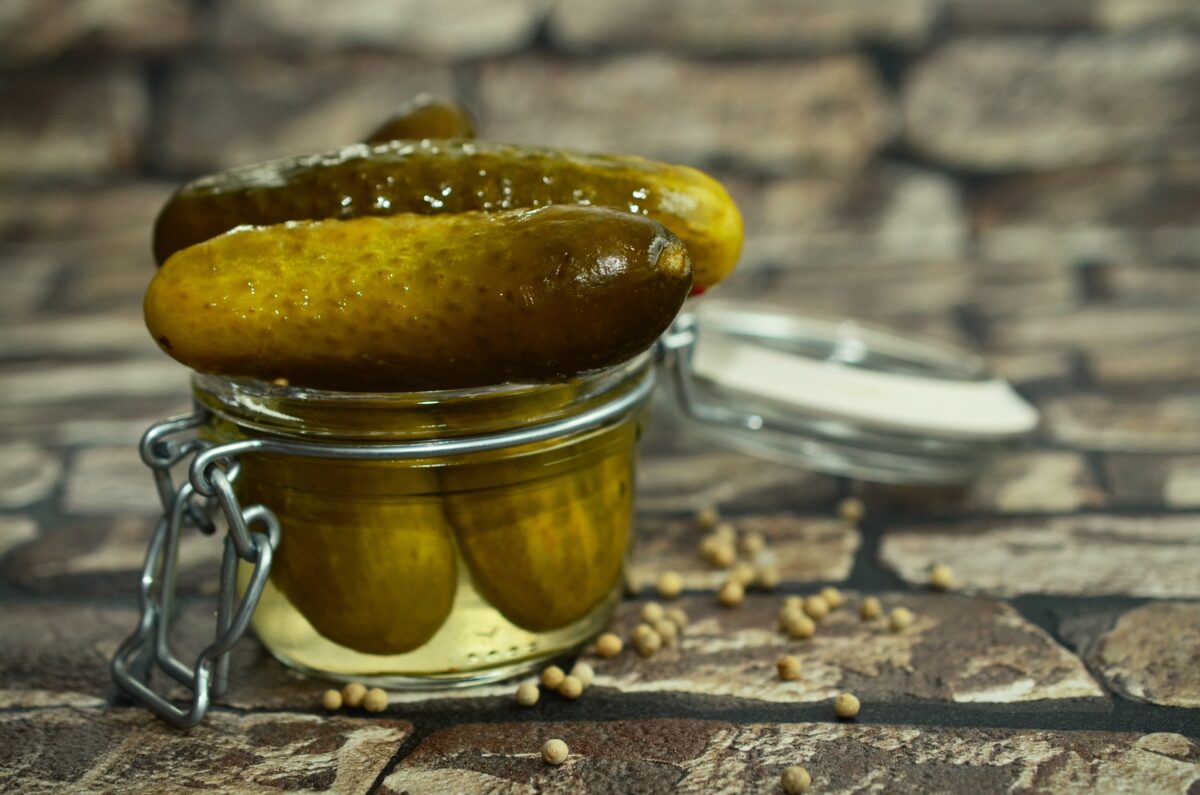
A gherkin is a small cucumber grown for pickling. It keeps its crunch after pickling and has a sweet and sour taste. Eastern and Central European kitchens have loved it for a long time, and today it turns up in kitchens and food factories around the world. Burgers, salads, sandwiches, and ready meals are common places to find it.
Demand for pickled gherkins keeps growing across Europe, North America, and other regions. Behind many of those finished products sits a simple ingredient: gherkins in brine. Brine in salt is dissolved in water, and it is one of the oldest ways to preserve vegetables.
For a food processor, brined gherkins are usually a starting point, not a finished snack. The processor behind decides the final flavor.
This post covers how brined gherkins are used in processing, how to pick a grade, how long they keep in drums, and what changes from one market to the next.
What Gherkins in Brine Are
Gherkins in brine are pickling cucumbers preserved in a salt and water solution. The salt pulls moisture out of the gherkins through a process called osmosis. Bacteria need moisture to multiply, so with less moisture their growth slows. That is how brined gherkins get through long shipping and storage times.
A few traits matter to processors:
- The taste stays close to fresh cucumber, with only a mild salt note.
- Salt levels need close watching during processing. Even a small drift can change texture and preservation.
- Bulk food-grade HDPE drums, usually 260 litres, are the standard pack. Pails suit smaller orders.
How Food Processors Use Gherkins in Brine
Processors use brined gherkins as a base. They add their own seasoning, vinegar mix or spice blend once the drums arrive, then repack, reprocess or private-label the result.
Repacking and Private Label
Brine gives a business control over the final flavour. A team that blends its own seasoning or runs a private-label line has room to work, because the gherkins arrive mild and ready for that step.
Sauces, Relishes and Sliced Products
Buyers who slice or dice gherkins for sauces and relishes have more room on grade range. Buyers who pack whole gherkins for retail usually want tighter grades.
Burgers, Salads, Sandwiches and Ready Meals
Gherkins go into burgers, salads, sandwich fillings and ready meals. They also work as a side with Italian, continental and oriental dishes. Each of those uses depends on the product staying crisp, consistent and safe from the day it is made to the day it is used.
Brine, Vinegar or Acetic Acid
The preserving medium shapes the taste and the way you plan to use the product.
| Medium | What it offers | Suited for |
| Salt brine | Mild flavour, close to fresh cucumber
|
Buyers who season, repack, reprocess or private-label |
| Natural vinegar | Tangy and ready to serve | Supermarkets, restaurants and food-service buyers
|
| Acetic acid | A set level of acidity | Buyers whose recipes call for it
|
Choosing the Right Grade
Size decides how many pieces you get in a kilo and how the finished product looks. Gherkins are graded by length in centimetres, and by weight and count.
Grades by Length
| Size | Length | Average fruits per kg |
| 3-6 | 3 cm to 6 cm | 80 to 130
|
| 5-8 | 5 cm to 8 cm | 60 to 80
|
| 6-9 | 6 cm to 9 cm | 35 to 50
|
| 8-10 | 8 cm to 10 cm | 23 to 27
|
| 9-12 | 9 cm to 12 cm | 13 to 20
|
Grades by Weight and Count
Many importers buy by grade code. Eleven ranges run from 10/20 up to 300+: 10/20, 10/30, 20/30, 30/40, 30/60, 60/100, 60/160, 80/120, 100/160, 150/300 and 300+. A few examples show how the code works:
- 300+: Under 3.3 g per fruit, more than 330 fruits per kg
- 100/160: 6.2 to 10 g, about 125 to 140 fruits per kg
- 60/100: 10.1 to 16.6 g, about 75 to 95 fruits per kg
- 20/30: 33.4 to 50 g, about 23 to 27 fruits per kg
Picking a Grade
Start with the end product and work backward. Decide how many pieces you want per kilo and how large each piece should look in your recipe. Settle the grade before the purchase order is placed, not after the container has shipped. If your product needs a count that sits between two standard grades, raise it early when you plan the order.
Shelf Life and Storage of Brined Gherkins
Sealed 260-litre food-grade HDPE drums carry a shelf life of one year (12 months) from the date of manufacture, as long as the drums are stored correctly and the seal stays intact. Confirm that period in writing, along with the manufacturing date on your batch.
Before Opening
- Store drums in a cool, dry, covered warehouse, away from direct sunlight and heat.
- Keep drums upright with tight lids, and place them on pallets instead of the floor.
- Use first in, first out. Record the batch number and manufacturing date when drums arrive.
After Opening
- Keep the gherkins fully submerged in their brine.
- Use clean food-grade utensils, and reseal the drum right after each use.
- Do not top up with plain water or with liquid from another batch.
- Use opened drums promptly. Brined gherkins have a shorter window once the drum is open.
Spotting Spoilage
Check every drum when it arrives and again when you open it. Warning signs include a bulging lid, leaks, an off smell, cloudy or stringy liquid, and soft or mushy gherkins. If you see one, do not use or repack the product. Set the drum aside, photograph it with the batch number and manufacturing date, and tell your supplier.
How Markets Differ
Tastes and paperwork both change from one market to the next, so it helps to settle each early.
Taste
Some regions favour the milder, closer-to-natural taste of brine. Others expect the sharper, tangier taste of vinegar. Pickled varieties are most loved in Eastern and Central Europe.
Paperwork
Rules differ from country to country, and one certificate does not cover every market. Three examples:
- United States: The manufacturer must be registered with the US Food and Drug Administration. Ask for the registration number and check it on the FDA website yourself.
- Europe: Orders call for APEDA registration and EU compliance. That covers traceability, hygiene records, pesticide residue limits and labelling rules.
- Kosher markets: Buyers supplying the US, Israel or parts of Europe where Kosher items are required need a supplier with approval from a recognized Kosher authority.
Sourcing Brined Gherkins from India
India is an established source of pickled gherkins for importers in Europe, the United States, the Middle East and other regions. Karnataka accounts for the largest share of the country’s export-grade pickled gherkins. The crop is picked young, usually within 45 to 55 days of sowing, so soil, water and harvest timing matter a great deal.
Many manufacturers work with contract farmers, which keeps the supply chain short and traceable. Pickled gherkins exporters from India also ship to demanding markets in Europe and North America, so they already know the paperwork and food safety rules involved.
Buyers who search for gherkins in brine suppliers in India usually compare a few things first:
- Farm and factory standards, such as Good Agricultural Practices (GAP) and Good Manufacturing Practices (GMP)
- The range of size grades on offer
- Current food safety certificates
- Whether the exporter has shipped to the buyer’s own country before
Gherkins in Brine from Indo Western Agro Exports
Indo Western Agro Exports (IWAE) is a producer and exporter based in Sira Taluk, Tumkur District, Karnataka. Among gherkins in brine suppliers in India, it offers gherkins in salt brine alongside natural vinegar, acetic acid, and preserved gherkins in drums and pails. Here is how the work is set up.
- On the farm: The company runs contract farming across Karnataka. Farmers receive non-GMO seed and are trained in good agricultural practices on soil, water and crop management. Drip irrigation and mulching save water. Company staff buy the harvest and carry it to the factory.
- At the factory: Every batch is cleaned, graded, soaked and washed. Foreign particles and flowers are removed, and damaged, crooked, bent or worm-infected fruit is set aside. The gherkins are packed in airtight containers while a quality control team watches each step.
- Standards: Production follows GAP and GMP. The company holds FSSC 22000, FSSAI and Kosher certifications, and its quality systems meet USFDA and European Union norms.
- Packing: Gherkins ship in 260-litre food-grade HDPE drums. Grades can be adjusted to a buyer’s requirements. Shelf life is one year from the date of manufacture when stored as recommended.
- Inspection: A pre-shipment inspection is built into every order and takes place before the container leaves the facility.
Besides gherkins, the company exports banderillas, jalapenos, bell peppers, chillies, baby corn and peppercorn. That helps buyers who would rather source several products from one supplier.
Export Markets Served by Indo Western Agro Exports
Indo Western Agro Exports supplies customers in the United Kingdom, the United States, Australia, France, Germany, Greece, Italy, the Netherlands, Poland, Russia, South Korea, Spain, Sweden and the UAE. Buyers in other global markets are served as well.
Ask any supplier whether it has shipped to your country before. Experience on a route means the customs, labelling and shipping rules are already familiar.
Checklist Before You Order
Have these details ready when you send an enquiry:
- The preserving medium: salt brine, natural vinegar or acetic acid
- The grade or size you need
- Your quantity in FCL (full container load)
- Your destination country
Then ask the supplier for:
- A grading chart that matches the grade you plan to buy
- Current copies of the FSSAI Central License, FSSC 22000 and Kosher certificates
- Samples
- Pre-shipment inspection reports
- The FDA registration number for US orders, or APEDA and EU compliance records for European orders
If the supplier is new to you, a small trial shipment is a sensible test before a larger order.
Summary
Gherkins in brine give food processors a mild base they can season, slice, repack, or private-label. The grade shapes both the piece count and the look of the finished product.
Sealed drums keep for one year from manufacture when stored well, and opened drums need to stay submerged and be used promptly. Tastes and paperwork vary by market, so confirm both early.
When you compare pickled gherkins exporter from India, certificates, grading range, and export history are good places to start. Indo Western Agro Export supplies gherkins in brine from Karnataka in 260-litre food-grade HDPE drums, with a pre-shipment inspection on every order.
Planning an order? Send Indo Western Agro Export your product, grade, medium, FCL quantity, and destination country, and ask for a grading chart and samples with your enquiry.

