
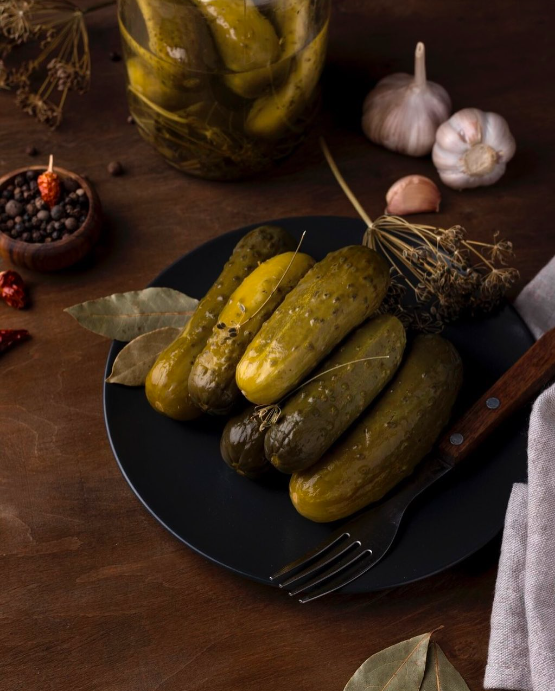
Choosing the wrong gherkin supplier can cost you time, money, and trust with your own customers. Bulk buyers need more than a low price. They need a partner who can deliver the same quality, order after order, and shipment after shipment.
Demand for pickled gherkins keeps growing across Europe, North America, and other regions. This makes the choice of supplier even more important in 2026. Here are ten things to check before you sign a deal with a bulk gherkin supplier.
1. Check for Farm and Food Safety Standards
A trusted supplier should follow Good Agricultural Practices and Good Manufacturing Practices. These rules cover how gherkins are grown, handled, and packed. Ask the supplier for proof of these standards before you place an order. This one step alone can rule out a lot of weak suppliers.
What to ask for:
- Copies of GAP and GMP certificates.
- Recently filed audit documents, if any.
- USFDA or EU food safety compliance documentation, depending on the markets you operate in.
2. Analyze the Supply Chain Strategy
Where do the cucumbers come from? Suppliers that follow contract farming can be more reliable as they educate farmers about seed quality, planting, and harvesting time. It decreases the chances of supply disruptions and product variability.
Ask the supplier:
- Do they run a contract farming network, or buy from open markets?
- How many farmers or growing regions do they work with?
- Can they trace a batch back to its source?
3. Ask About Available Grades and Sizes
Gherkins are graded by size, and different markets want different grades. A good supplier should offer a wide range, from small to extra-large, so you can match the grade to your product line.
Grades to ask about:
- Small pickling sizes for whole gherkin jars.
- Mid-range sizes for sliced or chopped products.
- Larger grades for bulk food service use.
4. Check Packing and Storage Methods
Gherkins may be pickled in natural vinegar, brine salt, or acetic acid. The decision depends on your product and the shelf life you need. Bulk buyers usually go for drums over small jars.
Check with the supplier:
- What packing methods they have.
- Drum size and material (food-grade HDPE)
- Net and drained weight per drum.
5. Review Food Safety Rules for Your Market
Food safety regulations differ from country to country. A supplier that exports to the US should meet USFDA rules. One that exports to Europe should meet EU rules. Do not assume one certificate covers every market.
Points to confirm:
- Which countries the supplier already exports to.
- Paperwork for your specific import market.
- Willingness to submit laboratory reports upon request
6. Look at the Production Location and Capacity
The major gherkin production zones in India include Karnataka, Tamil Nadu, Andhra Pradesh, and Telangana. The proximity to raw materials ensures a stable supply from a supplier situated in these belts.
What this affects:
- Steady supply of raw material.
- Ability to handle large or repeat orders.
- Response time for urgent requirements.
A supplier close to the farms also has fewer middlemen between the field and the packing unit. Fewer middlemen usually means fresher raw material and fewer chances for quality to slip.
7. Ask About Their Full Product Range
Many gherkin suppliers also grow other pickled vegetables, such as jalapeños, bell peppers, chillies, baby corn, and peppercorn. If you plan to expand your product line later, a supplier with a wider range saves you the work of finding a second vendor. It can also make price talks simpler, since more of your order sits with one partner.
Why this matters:
- One supplier can handle more of your orders.
- Easier to combine shipments and cut shipping costs.
- Useful if you plan to add new products later.
8. Check Export Experience and Track Record
A supplier with years of export experience knows how to handle paperwork, shipping, and customs. This means fewer delays at the port and fewer surprises for you. Newer suppliers can still work out well, but they carry more risk on your first few orders. A small trial shipment is a smart way to test them.
Look for:
- Years in the export business.
- Countries they currently serve.
- References from other bulk buyers, if possible.
9. Compare Value, Not Just Price
The cheapest quote is not always the best deal. A slightly higher price often comes with better grading, steadier supply, and fewer rejected batches at the port. A rejected batch can cost you far more than what you saved on price.
Weigh these factors together:
- Price per drum or per tonne.
- Steady grade and quality across orders.
- Support if a shipment has an issue.
10. Evaluate Communication and Support
Bulk orders take weeks to plan and ship. You need a supplier who replies quickly and answers your questions clearly, from the first inquiry to after the order ships.
Signs of good support:
- Fast, unambiguous answers to queries.
- Openness to sharing samples or documents.
- One point of contact for questions about your order.
How Indo Western Agro Exports Meet These Bulk Gherkin Standards
Indo Western Agro Exports, or IWAE, is located in Sira Taluk, Tumkur District, Karnataka. The company is one of the recognized pickled gherkin exporters from India. It grows and supplies gherkins, banderillas, jalapenos, bell peppers, chillies, baby corn, and peppercorn.
IWAE follows Good Agricultural Practices and Good Manufacturing Practices at every stage of production. The company also works to meet USFDA and European Union food safety rules, which matter for buyers in strict markets. Every product moves through the same steps: cleaning, grading, soaking, and washing before it reaches the drum.
The sections below match IWAE’s setup against the checklist above, point by point.
Sourcing and supply
- Works through a contract farming network with local growers across Karnataka.
- Can trace a batch from farm to finished product.
Grades and packing
- Supplies gherkins across many size grades, from 10/20 up to 300+.
- Packs in natural vinegar, brine salt, and acetic acid.
- Uses food-grade HDPE drums built for bulk export.
Product range
- Beyond gherkins, IWAE supplies banderillas, jalapeños, bell peppers, chillies, baby corn, and peppercorn.
- This gives bulk buyers the option to source more than one product from a single supplier, which is one reason many buyers consider IWAE among India’s best gherkin exporters for long-term sourcing partnerships.
Location and quality focus
- Based in Karnataka’s gherkin belt, close to the raw material.
- Every batch goes through cleaning, grading, soaking, and washing before packing.
For buyers working through the checklist above, IWAE offers a sourcing model, grading range, and packing setup built around the exact points that matter most in a bulk gherkin deal.
Conclusion
Choosing a bulk gherkin supplier in 2026 is not just about price. Standards, sourcing model, grading, packing, market rules, location, product range, export track record, value, and support all shape whether a deal works long-term.
Run each supplier you shortlist through this list of ten checks before you commit. Suppliers like Indo Western Agro Exports show what it looks like when a business is built around these exact points, from the farm in Karnataka to the drum on your dock.

