
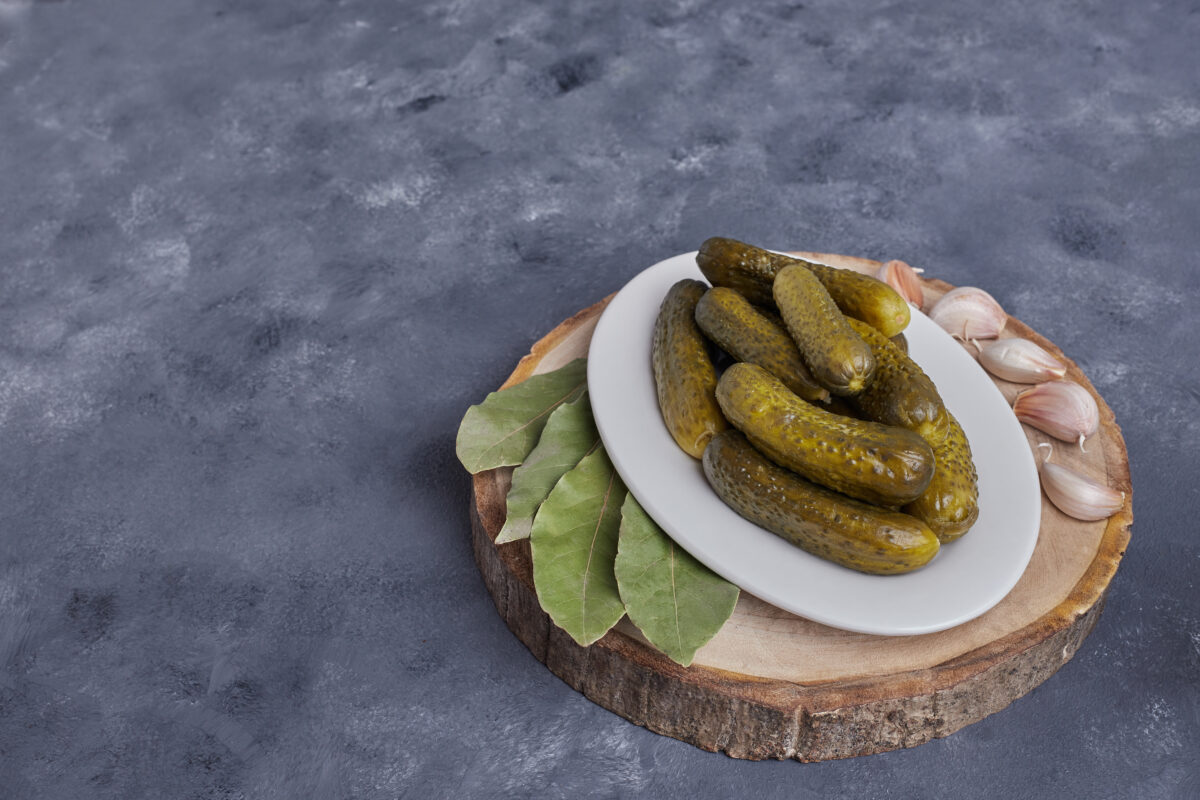
A gherkin is a small cucumber grown for pickling. It keeps its crunch after pickling, which is why it turns up in burgers, salads, and sandwiches, and on the side of Italian, continental, and oriental meals. Demand for pickled gherkins keeps growing across Europe and North America, and many importers now look to India for supply.
The crop likes warmth. Gherkins grow at 15 to 35 degrees Celsius, and Tamil Nadu, Andhra Pradesh, and Karnataka can give up to three crops a year. Karnataka holds the largest share of India’s export-grade pickled gherkins.
For a first-time importer, the process can feel like a lot. What should you buy? Which papers should a supplier show? What will your own border expect? This guide takes the steps in order and points to the official rules in the US, UK, and EU.
Quick Answers for New Importers
What do Indian suppliers ship? Buyers often search for fresh gherkin exporters from India. The product Indo Western Agro Exports (IWAE) ships is pickled: gherkins in natural vinegar, salt brine, or acetic acid, plus preserved gherkins in drums and pails.
Where does IWAE export? To the United Kingdom, the United States, France, Germany, the Netherlands, Greece, Italy, Poland, Spain, Sweden, Australia, Russia, South Korea, and the UAE. Buyers in other global markets are served too.
Where is the company based? In Sira Taluk, Tumkur District, Karnataka.
Step-by-Step: How to Import Gherkins from India
Here are the steps to import gherkins from India:
Step 1: Choose the Preserving Medium
This choice shapes taste, packaging, and use. There are three options.
- Natural vinegar: Tangy and ready to serve. It suits supermarkets, restaurants, and food-service buyers.
- Salt brine: Mild, close to natural cucumber. Many buyers add their own seasoning later, so it fits repacking and private-label work.
- Acetic acid: For recipes that call for a set level of acidity.
Step 2: Pick The Grade and Size
Gherkins are graded by count, and a smaller number means a smaller gherkin. IWAE offers eleven grades: 10/20, 10/30, 20/30, 30/40, 30/60, 60/100, 60/160, 80/120, 100/160, 150/300, and 300+.
Size can also be set by length. The 3 to 6 cm range runs about 80 to 130 gherkins per kg, 6 to 9 cm about 35 to 50, and 9 to 12 cm about 13 to 20.
Buyers who pack whole gherkins for retail usually want tight ranges. Buyers who slice or dice for sauces have more room. Settle the grade before the purchase order, not after the container ships. Custom grading is available.
Step 3: Confirm The Packing
The standard pack for bulk pickled gherkins import is a 260-litre food-grade HDPE drum. Pails suit smaller quantities. Vinegar gherkins can also come in retail jars, bottles, or pouches.
Before you confirm, ask:
- How are the drums sealed for transit?
- What are the net and drained weights per drum?
- How are drums labelled, and is private label or custom packing offered?
Sealed drums carry a shelf life of one year from the date of manufacture when stored as recommended. Get that period in writing.
Step 4: Check Certifications Before Price
A shipment that misses the rules can be detained, rejected, or destroyed at the port. That costs far more than a lower quote saves. IWAE holds an FSSAI Central License, FSSC 22000, and Kosher certification.
Production follows Good Agricultural Practices (GAP) and Good Manufacturing Practices (GMP), and its quality systems meet USFDA and European Union norms.
Do not assume one certificate covers every market. Rules differ by country.
Step 5: Send An Enquiry and Ask For Samples
A clear enquiry saves days. The IWAE form asks for the product, grade or size, medium, quantity in FCL, and destination country. FCL means full container load.
Ask for a grading chart, certificate copies, and samples at the same time. With a new supplier, a small trial shipment is a sensible test before a bigger order.
Step 6: Inspection and Dispatch
Every order gets a pre-shipment inspection before the container leaves the facility. Ask for the report so you have a written record.
Document Checklist
- Current FSSAI Central License, FSSC 22000, and Kosher certificates
- A grading chart that matches your grade
- The pre-shipment inspection report
- The supplier’s FDA registration number, for US orders
- APEDA registration and EU compliance records, for European orders
- Paperwork for your own import market
On that last point, ask whether the exporter has shipped to your country before. Your customs broker can confirm what else your port needs.
Destination Rules: USA, UK, and EU
Confirm these with the official bodies before you ship. Rules change.
- United States: The FDA says importers can bring in food without prior sanction as long as the facilities that handle it are registered and prior notice of each shipment is given. Most food facilities renew registration every two years. Importers also have duties under the Foreign Supplier Verification Program.
- United Kingdom: The Food Standards Agency says imported fruit and vegetables, whether fresh, dried, tinned, processed, or frozen, must meet the same hygiene standards as food produced in Great Britain. Some higher-risk plant foods must enter through approved border control posts and be pre-notified on IPAFFS. Check the FSA list for your product.
- European Union: Labelling follows Regulation (EU) No 1169/2011 on food information to consumers. For EU orders, ask the supplier for traceability, hygiene records, pesticide residue limits, and labelling rules, along with APEDA registration.
Why First-Time Importers Choose IWAE
As one of the pickled cucumber manufacturers in India, IWAE runs contract farming across Karnataka. Farmers get non-GMO seed and inputs, plus training in modern methods and Good Agricultural Practices. Drip irrigation and mulching save water.
Company staff buy the harvest and carry it to the factory, where each batch is cleaned, graded, soaked, and washed before it is packed in airtight containers. About 75% of the factory staff are women.
FAQs (Frequently Asked Questions)
- What are the main steps to import gherkins from India?
Choose the medium, pick the grade, confirm the packing, check certificates, send an enquiry with a sample request, and review the inspection report.
- Which gherkin supplier serves the USA, UK, and Europe?
IWAE supplies customers in the US, UK, Germany, France, the Netherlands, and several other European markets.
- How are bulk gherkins packed?
In 260-litre food-grade HDPE drums, or in pails for smaller quantities.
- How long do sealed drums last?
One year from the date of manufacture, when stored as recommended.
Summary
Take the decisions in order. Pick the medium, then the grade. Confirm drum or pail packing and shelf life. Check the FSSAI, FSSC 22000, and Kosher status, plus the FDA or APEDA and EU records your market needs. Send a clear enquiry, ask for samples, and request the inspection report before the container leaves.
Ready to plan your first order? Use the enquiry form on the Contact Us page of Indo Western Agro Exports, and share your product, grade, medium, FCL quantity, and destination country.

