
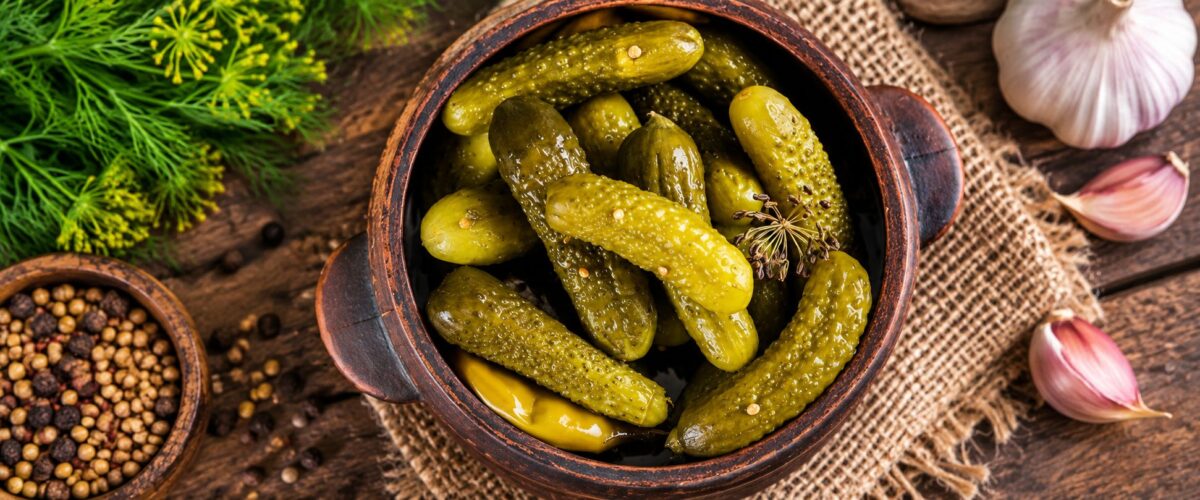
Preserving vegetables is one of the oldest food practices, and pickling remains one of its most trusted forms. Gherkins are a variety of cucumber grown for pickling, and they keep their crunch after preserving. Their sweet and sour flavour has made them a staple of Eastern and Central European cuisine, and today they are used in kitchens and food factories across the globe.
That wide use brings a practical question for importers, distributors, food manufacturers, and repackers: how long do gherkins last? Gherkins go into burgers, salads, sandwiches, and ready meals, and they are served as a side with Italian, continental, and oriental dishes. Each of these uses depends on the product staying crisp, consistent, and safe from the day it is manufactured to the day it is used.
The answer depends on two factors: the preservation method and whether the drum has been opened. This guide compares brine and vinegar gherkins, explains how bulk drums should be stored and handled, shows how to spot spoilage, and sets out what a bulk buyer should look for in a supplier.
Gherkin Shelf Life at a Glance
Unopened, sealed drums: Gherkins packed in 260-litre food-grade HDPE drums have a shelf life of one year (12 months) from the date of manufacture, provided the drums are stored correctly and the seal is intact. Always confirm the period, and the manufacturing date on your batch, in writing before you order.
- Opened brine gherkins: Once a drum is opened, the shelf life shortens. Keep the gherkins submerged in their brine, reseal the drum, and use the contents promptly.
- Opened vinegar gherkins: The acidity gives a little more protection than brine, but an opened drum still needs careful handling and prompt use.
Vinegar-preserved gherkins also require careful handling after opening. Follow the specified storage temperature and use the product within its validated post-opening holding period.
How Brine Preserves Gherkins
Brine is a controlled mix of salt and water. It is one of the oldest and most dependable ways to preserve vegetables. The salt draws moisture out of the gherkins through osmosis. Bacteria need moisture to multiply, so less moisture slows their growth. This is why brined gherkins can handle long shipping and storage cycles.
Key points about brine gherkins:
- The taste stays close to natural cucumber, with a mild salt note.
- Many buyers use brine gherkins as a base product and add their own seasoning, vinegar mix, or spices later.
- Salt levels must be watched closely during processing. Even a small drift can affect texture and preservation.
- Bulk food-grade HDPE drums are the standard packing, which suits buyers who repack, reprocess, or private-label.
How Vinegar Preserves Gherkins
Vinegar gherkins go through the same cleaning and grading steps as brined ones. The difference is the liquid. They are packed in a vinegar-based solution, usually with a measured amount of acetic acid, sugar, and spices.
Key points about vinegar gherkins:
- The flavour is sharp and tangy, and the product is ready to use.
- For bulk buyers, vinegar gherkins are supplied in the same 260-litre food-grade HDPE drums, so they can go straight into your own repacking or production line.
- The acidity adds a further layer of protection after a drum is opened, compared with brine.
- They tend to hold their crunch well, provided the opened drum is kept sealed, cool, and clean.
Brine and Vinegar Gherkins Compared
| Feature | Gherkins in Brine | Gherkins in Vinegar |
| Preserving liquid | Salt and water | Vinegar or acetic acid solution |
| Taste | Mild, close to fresh cucumber | Sharp and tangy |
| Shelf life (unopened, sealed drum) | 12 months from date of manufacture | 12 months from date of manufacture |
| After opening | Shorter window; keep submerged, sealed, and cool | Slightly longer window; keep sealed, cool, and clean |
| Usual packing | 260-litre food-grade HDPE drums | 260-litre food-grade HDPE drums |
| Best suited for | Repackers and manufacturers who add their own seasoning or liquid | Importers, distributors, and manufacturers who need a ready-to-use tangy product |
Storage and Handling of Bulk Gherkin Drums
Proper storage helps maintain the product’s quality and supports its declared shelf life, provided the specified storage conditions are maintained.
Before opening:
- Store drums in a cool, dry, covered warehouse, away from direct sunlight and heat sources.
- Keep drums upright with lids tightly sealed, and place them on pallets rather than directly on the floor.
- Do not stack drums beyond their rated limit, as damaged drums can leak or lose their seal.
- Use a first-in, first-out (FIFO) system, and record the batch number and manufacturing date on receipt.
- Avoid long exposure to high temperatures during transit and warehousing.
After opening:
- Keep the gherkins fully submerged in their brine or vinegar liquid at all times.
- Use clean, food-grade utensils only. Never use bare hands or tools that have touched other products.
- Do not top up with plain water or with liquid from another batch.
- Reseal the drum immediately after each use, and keep it in a cool place (a cold room where possible).
- Use opened drums promptly and avoid holding partly used drums for long periods.
How to Identify Spoilage in Bulk-Packed Gherkins
Properly processed gherkins in sealed drums are stable, but transit damage, poor storage, or careless handling after opening can cause spoilage. Check every drum on receipt and again each time one is opened.
Signs on the drum (before opening):
- Bulging or swollen lid or sides: This can indicate gas build-up from fermentation or microbial activity.
- Leakage or damaged seal: A broken seal lets air and contaminants in, and the drum should be set aside.
- Cracks, dents, or heavy deformation: These can compromise the drum’s airtight closure.
Signs in the product (after opening):
- Off smell: A rotten, yeasty, or sharply fermented odour, instead of a clean brine or vinegar aroma.
- Cloudy, slimy, or “ropy” liquid: Brine or vinegar that has turned abnormally cloudy, thick, or stringy.
- Soft, mushy, or hollow gherkins: Loss of firmness or crunch is a common early warning.
- Discolouration: Dark patches, unusual browning, or fading well beyond the normal colour of the batch.
- Surface film, mould, or yeast: Any growth on the liquid surface or on gherkins exposed above the liquid line.
- Unexpected gas release: A hiss or fizzing when the lid is opened.
What to do if you find spoilage:
- Do not use or repack the product.
- Isolate the affected drum and photograph it, along with the batch number and manufacturing date.
- Contact your supplier promptly so the batch can be investigated.
- Keeping batch records and checking drums on arrival makes it much easier to tell whether an issue started in transit, in storage, or after opening.
Why Size Grading Matters
Gherkins are graded by size depending on how they will be used: sliced, packed whole, or served as a garnish. Settle the grade before the purchase order is placed, not after the container has shipped. Three common length-based sizes are:
- 3 to 6 cm: Roughly 80 to 130 fruits per kg
- 6 to 9 cm: Roughly 35 to 50 fruits per kg
- 9 to 12 cm: Roughly 13 to 20 fruits per kg
Where Gherkins Are Grown
The gherkin plant has its native roots in Southern Africa and needs warm climates. Growing requires a temperature of 15 to 35 degrees Celsius.
South India suits this well. Gherkins are grown in Tamil Nadu, Andhra Pradesh, and Karnataka, where the climate allows up to three crops a year.
What Should a Bulk Buyer Look for in a Gherkin Supplier?
Shelf life on paper only matters if the supplier can deliver it consistently, batch after batch. Before placing a bulk order, importers, distributors, food manufacturers, and repackers should look for:
- A confirmed shelf life: A clear written period for your exact product and packing, with the manufacturing date on every batch.
- Food safety certifications: Recognised standards such as FSSC 22000, along with regulatory and Kosher approvals where your market requires them.
- Compliance with export-market norms: Systems that meet USFDA and European Union requirements.
- Consistent grading: Size grades that are agreed up front and hold steady from shipment to shipment.
- Suitable bulk packing: Sound, food-grade HDPE drums that protect the product through long shipping cycles.
- Quality checks and pre-shipment inspection: Testing at each stage of processing, and inspection before the container leaves.
- Export experience: A track record of shipping to demanding markets on schedule.
These are the questions worth putting to any supplier:
- What is the shelf life of my exact product and pack?
- Is brine or vinegar the better fit for my use?
- Which size grades are available?
- Which certifications can you show?
- What quality checks and pre-shipment inspections do you carry out?
Indo Western Agro Exports (IWAE) is built around exactly these requirements.
Bulk Brine and Vinegar Gherkins from Indo Western Agro Exports
Indo Western Agro Exports (IWAE) is a producer and exporter of bulk gherkins based in Sira Taluk, Tumkur District, Karnataka, India. We supply importers, distributors, food manufacturers, repackers, and other B2B buyers, and both preservation styles discussed above are part of our regular range.
Product Range
- Gherkins in natural vinegar
- Gherkins in salt brine
- Gherkins in acetic acid
- Preserved gherkins in food-grade HDPE drums
Processing and Food Safety
Every batch is cleaned, graded, soaked, and washed before it is packed in airtight containers. Our quality control team monitors each step. We follow Good Agricultural Practices (GAP) and Good Manufacturing Practices (GMP), and we choose our raw material suppliers with care.
- Certifications: FSSC 22000, FSSAI, and Kosher.
- Standards: Our quality systems meet USFDA and European Union norms.
- Checks: We run quality tests and carry out pre-shipment inspections.
Packing, Shelf Life, and Grades
Our gherkins are supplied in 260-litre food-grade HDPE drums, with a shelf life of one year from the date of manufacture when stored as recommended. Grades can be adjusted to your requirements, so the size you settle on can match the way you plan to use the product.
Export Markets
We supply customers in the United Kingdom, the United States, Australia, France, Germany, Greece, Italy, the Netherlands, Poland, Russia, South Korea, Spain, Sweden, and the UAE. We also serve other global markets.
Summary
Brine preserves gherkins with salt, and vinegar preserves them with acidity. Bulk gherkins packed in sealed, food-grade HDPE drums have a shelf life of one year from the date of manufacture when stored in a cool, dry place.
Once a drum is opened, keep the gherkins submerged, reseal promptly, and use the contents quickly. Check drums on arrival and at opening for the spoilage signs above.
To discuss shelf life, grades, or a bulk order, send an inquiry to the Indo Western Agro Exports (IWAE) team on +91-9731941515 or at marketing_team@iwaepl.com.

